
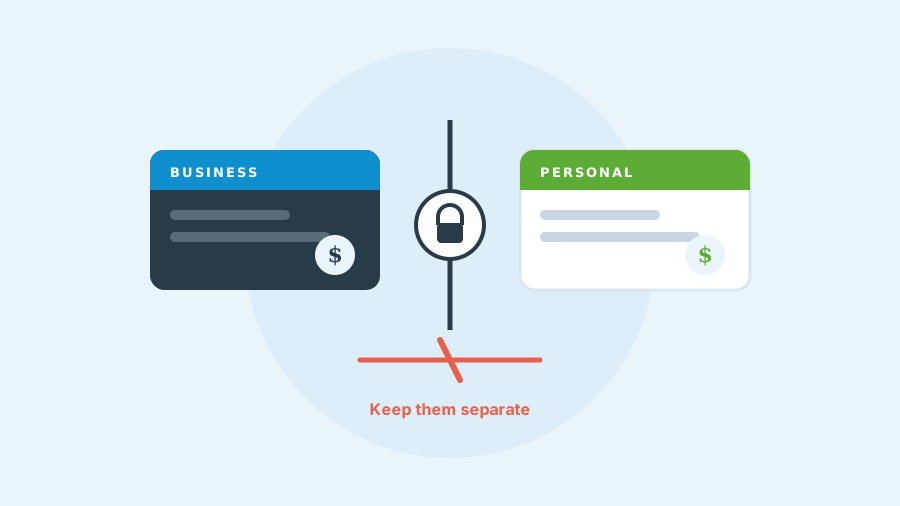
It’s the most common mistake we see, and one of the most costly: running business and personal money through the same accounts. It feels harmless — it’s all your money, after all — but commingling funds quietly undermines your taxes, your legal protection, and your ability to know whether your business is actually making money.
Why it matters more than it seems
Mixing the two accounts creates three real problems. First, your books become unreliable — when personal Amazon orders and business supplies hit the same statement, no report you produce can be trusted, and every deduction becomes an argument. Second, you can lose deductions you were entitled to, because expenses buried in a personal account get missed or can’t be substantiated. Third, and most serious for LLCs and corporations, you can weaken your liability protection. The whole point of forming an entity is the legal wall between your business and your personal assets — and commingling funds is exactly what a court looks at to decide whether that wall is real or just paperwork.
The legal protection of an LLC or corporation isn’t automatic — it’s something you maintain. Nothing dissolves it faster than treating the business account like your personal wallet.
How to pay yourself — it depends on your entity
The right way to move money from the business to yourself depends on how your business is structured:
- Corporation or S corporation: you’re an employee of your own company, so you take a reasonable salary through payroll — a real paycheck with taxes withheld. An S corporation owner can also take additional distributions on top of that salary, which is one of the S corp’s key advantages — but only once a reasonable salary has been paid first. (We covered exactly what “reasonable” means in a separate article on S corp compensation.)
- LLC, sole proprietorship, or partnership: you don’t take a paycheck. You take an owner’s draw — you move money from the business account into your personal account, and then pay your personal expenses from there.
The one rule that keeps it clean
Whatever your entity, the discipline is the same, and it’s simple enough to put on a sticky note:
- Pay business expenses from the business account. Always.
- Pay personal expenses from your personal account. Always.
- Never pay a business expense from your personal account, and never pay a personal expense from the business account.
When you need business money for personal use, don’t reach into the business account at the register — move it properly first (a draw, or your payroll check), then spend it from your personal account. That single habit — move it, then spend it — is what keeps the wall standing.
Setting it up
The mechanics are straightforward: a dedicated business checking account, a dedicated business credit or debit card, and the rule above. Mistakes happen — and how you fix them depends on your entity:
- If you’re a corporation or S corporation and a personal charge accidentally lands on the corporate card, the clean fix is simple: repay the company. Write a personal check back to the business (or record it as a receivable and reimburse it promptly) so the business is made whole. Do not try to run it through payroll — grossing up an accidental gas-station charge into a paycheck, with withholding and amended filings, turns a five-minute fix into a genuine headache.
- If you’re an LLC, sole proprietor, or partnership and a personal expense slips onto the business card, simply record it as an owner’s draw — no harm done, since draws are how you take money out anyway.
Either way, don’t hide it — record the correction so the books stay honest. The goal isn’t perfection; it’s clean, defensible records where every business dollar can be traced.
The bottom line
Separate accounts aren’t bureaucracy — they’re what makes your books trustworthy, your deductions defensible, and your legal protection real. Corporations take a payroll check (plus distributions for S corps); everyone else takes draws; and nobody crosses the streams. This is general guidance rather than advice for your specific situation, and the right pay structure depends on your entity and facts — but setting this up correctly, and keeping it clean all year, is foundational to everything else we do for the businesses we work with.