Few corners of the tax code trip up business owners like meals and entertainment. The rules have changed several times in recent years, and 2026 brought another round. Here is what actually counts, what doesn’t, and the one distinction that matters more than any other.
Start here: meals and entertainment are not the same thing
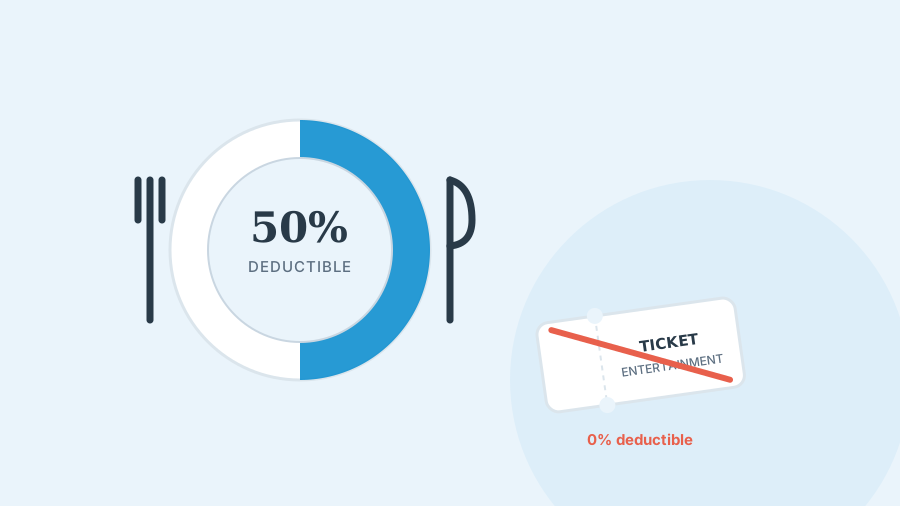
This is the single most important idea, and it’s where most owners go wrong. Since the 2018 Tax Cuts and Jobs Act, entertainment is 0% deductible — not one dollar. Business meals, by contrast, are generally 50% deductible. Two different rules, two different outcomes, and the IRS treats them very differently.
So taking a client to a baseball game, a round of golf, or a concert? The tickets, the greens fees, the box seats — none of it is deductible, no matter how much business gets done. There is no return of the old “50% entertainment” rule that some owners still remember. Club dues — social clubs, golf clubs, and the like — stay nondeductible too.
The relationship you build over that ballgame may be priceless. The ticket, as far as the IRS is concerned, is worth nothing on your return.
The 50% meal deduction — and what it takes to qualify
Most ordinary business meals remain 50% deductible in 2026. To qualify, a meal generally has to clear four bars:
- It’s ordinary and necessary for your business
- It’s not lavish or extravagant under the circumstances
- You or an employee are present
- There’s a clear business purpose
That covers meals with a current or potential client, customer, or business contact, and meals while you’re traveling away from home overnight on business, or at a business convention, meeting, or working lunch.
The trap: a meal at an entertainment event
Here’s where owners lose deductions they were entitled to. Say you take a client to a game and buy food and drinks there. The food can still be 50% deductible — but only if it is billed separately from the entertainment. If it’s all lumped into one charge with the tickets, the entire thing becomes nondeductible.
The fix is simple and worth the small hassle: ask for a separate receipt for the food and drinks. That one habit preserves the meal deduction and keeps it cleanly documented.
What’s still 100% deductible
A few categories escape the 50% haircut entirely. The most common for a small business is the employee morale event — a holiday party, a summer outing, a team lunch — when it’s primarily for the benefit of your rank-and-file staff rather than owners and top earners. These can even include entertainment (a DJ, bowling, an amusement park) and stay fully deductible. Meals you sell to customers, and meals included in an employee’s W-2 as compensation, are also fully deductible.
What changed for 2026
This is the part most owners haven’t caught up on yet. Beginning in 2026, meals provided for the convenience of the employer are generally no longer deductible. The overtime dinner you buy so the team can keep working, the meals furnished at the office for business reasons — these used to be at least partly deductible and generally are not now. The same goes for employer-operated eating facilities like an on-site cafeteria, and even the small stuff: break-room coffee and pantry snacks are no longer deductible either. These changes flow from the One Big Beautiful Bill Act and took effect this year.
There are narrow industry exceptions — certain transportation workers subject to Department of Transportation hours-of-service rules can deduct 80% of their travel meals, for instance — but for the typical service business, the headline is simple: the “feeding the team” deduction got much narrower in 2026.
The records that protect you
Meals are a perennial IRS audit target — they’re easy to overstate and hard to prove after the fact. IRS Publication 463 spells out what a defensible record looks like, and it comes down to four things for every business meal:
- The amount spent
- The date and place
- The business purpose
- The business relationship of the people present
A credit-card statement alone doesn’t cut it — it shows the amount and date but none of the “why” or “who.” The winning habit is to snap a photo of the receipt and jot the purpose and the name of who you dined with, right then, while you remember. Reconstructing it a year later in an audit is exactly the position you don’t want to be in.
The bottom line
Meals: 50%, with a present taxpayer, a business purpose, and a real receipt. Entertainment: nothing. Meals at an entertainment event: only if billed separately. Employee parties: 100%. And in 2026, be careful with meals for your own team — a lot of what used to be deductible no longer is.
These rules shift often, and the right answer for your business depends on your entity type and the specifics of each expense. This is general information, not advice for your situation — but sorting exactly this kind of thing out, and making sure your bookkeeping captures it correctly the first time, is a core part of what we do for the businesses we work with.